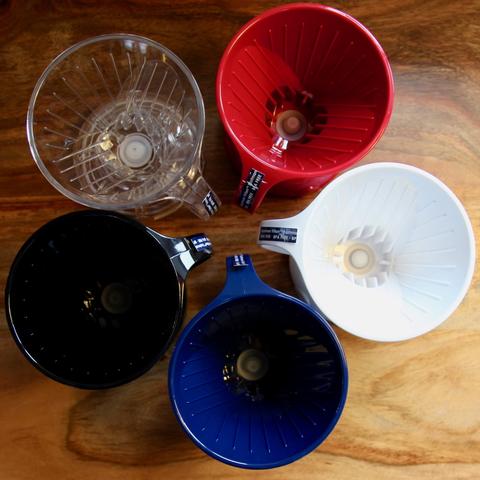
A little thing, but very lovely sent to me by a lovely customer, made me smile
Still think I have the best customers in the world.
Made me smile some one would do that for me. I like, I like it a lot.
This is a list of "some" of the others sites/projects we have at Has Bean we like to call the "Has Bean Empire" please take a look give us some feedback on the other things we do.
So a big reason for wanting to make this trip was to go picking pulping of my own coffee. I've never been able to say I have picked the coffee I roast as pickings have been on farms that we have been unable to buy everything from.
I think that the roast style has nothing to do with the brew method of the coffee, nor do I believe that you should roast coffee differently for those different styles.
Pre ground coffee, a compromise too far, or a way of bringing in the masses?
Here I explore and share some of my favourtie people I follow on the phenomenon known as twitter
I take an in-depth look into all the elements that go into making espresso blends
A few weeks ago I was on Wine Library TV, drinking and talking wine with Gary Vaynerchuk
I went down to see Willie Harcourt-Cooze and see how he roasts his cocoa and we drank some coffee
Getting away from work and down to Penrith for the UK's most talked about festival


These photos are a few weeks old now, but I thought I should still share them. There from Fazenda Floresta in Bahia and its showing me how much work they need to do to pick.
Luca sent this through as an email
“The “scale” of ripeness goes from the green to the black …as in that picture(above).
It goes from the green to the ‘’yellowish green’’ (which will not be as astringent as the green), then to orange, then light red, vivid red…. into the purple…. After that it will dehydrate into, dry, parched fruit … and finally black.
Normally, commodity like processed coffee will wait for the point in which the ‘’ average ‘’ is more in the middle range, and take all the fruits.
Selective, quality oriented picking will pass and pick the ripe one a few times over a period time – in our case, in a not so cold year, pass again every 8 to 10 days. In a year of lower temperatures, every 15 days or so. But even among the ‘’ripe’’ ones, you have the red and the purple… Which will have more time to concentrate the sugar while still in the tree – ‘’alive’’ – as opposed to the ripe ones in the drying patio. The metabolism still on but starts to perish… the older people, or the popular knowledge if you wish, recognize the purple the perfect point… I am not sure. (see photo below)”
(The ones on the right are good and ready)
So good picking is just as important as good growing and roasting.

Those who are eagle eyed may have seen me pop some pictures up on my flickr account last Saturday evening of some coffee cherry’s.
After being out for the evening I returned home to find an email from Fazenda Terramater with a couple of photos of a special project they have done for me without asking.
On my visit last year, I saw a whole heap of coffee bushes planted on the edge of the property underneath some huge old pine trees. I asked Luca who was translating for me to ask Adoedato if the pine cones and the trees by these plants made a difference to the final cup. As he asked Adoedato you could see from his face he thought what a stupid question and shrugged.
Now at the time of the visit we were not buying any coffee from Adoedato and I hadn’t even had a chance to cup it. It was only persistently asking for a sample after I got back and got a chance to cup it that we did buy it. So there was no reason for Adoedato to listen to anything the crazy gringo asked.
But Saturday night the photos below were in my inbox and the forest coffee under the tress is going to be kept separate this year to see if the pine cone fertilizer makes any difference to the final cup. I have no idea but the total production will be 1 bag if we are lucky so we are going to find out together
This is why its worth while visiting origin, spending the time expressing what you would like to find out with farmers so they can put it together, no matter how crazy the requests are.
In a few weeks time I’m back to Bahia for some more exploring and some more feedback on what we would like to see, its so cool to have this open channel of communication direct with the producers.

In this weeks in my mug I talked about Leaf rust (roya) and the problems its causing on Colombia at the moment.
Leaf rust (roya) is a disease that effects the leaves and the yield of as coffee plant and its general health. Firstly found in 1869 in Ceylon (now known as sri lanka). Ceylon was a huge coffee producer at the time, but because of the rust they ripped most of their coffee plant stock, and planted tea. Kind of good for them as they became one of the tea producing giants, but this was not the end of the disease.
From Ceylon the next place for rust to be cited is in the 1870, where it spread to sumatra and Java and the Indonesian isles. This was devastating and saw a change of varietals that were planted as a way of combating the problem.
From Asia the next place this was to Tanzania and Madagascar in the 1880’s. Interestingly not making it to west africa until 1956 which seems very strange to go from this rampant spread to stop spreading (but still having a very strong foothold in the places where its found).
It seemed that South / central America was immune from this spread, but then in 1970 it was reported in Brazil and from there rapidly to all south / central American producing countries.
It is transported by a powder that is attached to the plant (like pollen) and is carried through the air, on clothes by people and by insects, and once it begins to take hold then it really does go rampant.
A lot of effort was put into finding a coffee that was naturally immune from the disease, and it was found that strains like Liberica and robusta have a higher resistance to the roya but arabica is very very susceptible to it is weak against rust. Lots of cross breading has produced some more immune strains, but normally at the cost of cup quality.

It is believed that high shade very wet high humidity conditions also add to the risk of roya.
Talking to a friend who has just returned from Colombia roya seems to be rampant, and there is a real problem they are trying to deal with. You can spray the plants with a copper based fungicides but no one likes spraying things and these fungicides are expensive and in short supply. The other way is to plant varietals that are less susceptible. There are many alternatives but advice given to farmers in an article I was sent was to plant Catimore, which as part of a mixed plant stock is fine (and we have seen some great ones) but on its own rarely produces quality coffee.
I think there will be a real drop in quality of Colombian coffee with this kind of advice, and I do hope that farmers choose a different route, the new Colombian we have just stocked is trying F6 which has more promise of quality.
In Colombia low yields because of weather issue have been a problem for a while, with this problem prices for Colombia are in essence double of that the markets are showing and I only think it will get worse
As I said I talked about this on this weeks in my mug see below

In a slightly ambitious plan, I was honored to be asked to guest blog on dirtycup blog, and kindly accepted.
I think that they hadn’t noticed the complete lack activity here, and the lack of inspiration but I thank them very much for the opportunity.
My Inspiration was the previous post about roast styles and you can go and read it here.
The good news (or bad) is I do have some inspiration for a post over the weekend, if the world cup doesn’t get in the way.

Has a great day yesterday in Liverpool with a meeting and then popping into a new shop thats opened up in Bold Street in the city center.
Owned and run by Sam Tawil a good friend and long term customer of ours, Sam has moved from the events business (which he will still be doing) to a bricks and mortar.
Great food, espresso, pour overs filter coffee made by talented baristas in an amazing environment. I expect it to be great with Sam involved but it blew me away. If your in Liverpool you must must visit, tell them we sent you and you will be charged double