New Coffee:COLOMBIA HUILA PITALITO OPORAPA

".........In the cup expect sweetness by the bucket load: chocolate mixed with walnuts and brown demerara sugar. There is a delicate acidity of peaches, but this is all about sweetness, mouthfeel, and chocolate........"

Another colombian !!! Yes another colombian.

Colombia this year has been fertile land for us to find new and interesting coffees. Non more so than this one. All bought on the cupping table blind, this coop coffee stood out as ana amazing espresso coffee for my mind. Sweet chocolate, and all delicious.

You need some proof of of that watch the in my mug that accompanies it

You can buy it here or read about it below

In the cup expect sweetness by the bucket load: chocolate mixed with walnuts and brown demerara sugar. There is also a delicate acidity of peaches, but this is all about sweetness, mouthfeel, and chocolate.

This is another of the delicious coffees I bought from my Colombia September 2012 trip, where I was lucky enough to be shown hundreds of coffees from which to choose what we were to bring back. We saw all of them on blind cupping tables where taste was the only director of choice, with lot sizes as little as 35kg and some as big as 100 bags.

This one stood out. It was one of the larger lots, and I am very excited to share it with you. It was bought with espresso 100% in mind.

It comes from two areas of Colombia; Oporapa and Pitalito, both in the deep south of the department of Huila. This is a place well known to me on the cupping table and in its cup profile, and it has produced some of my favourite coffees from Colombia. Most growers in these regions are small holders who do not have the ability or coffee to sell a specialty lot big enough to satisfy even a small roaster like us.

This coffee is put together by 11 producers, 7 from Pitalito and 4 from Oporapa. So each day’s pickings are cupped, and if they score above a certain level they get added to this regional cooperative blend.

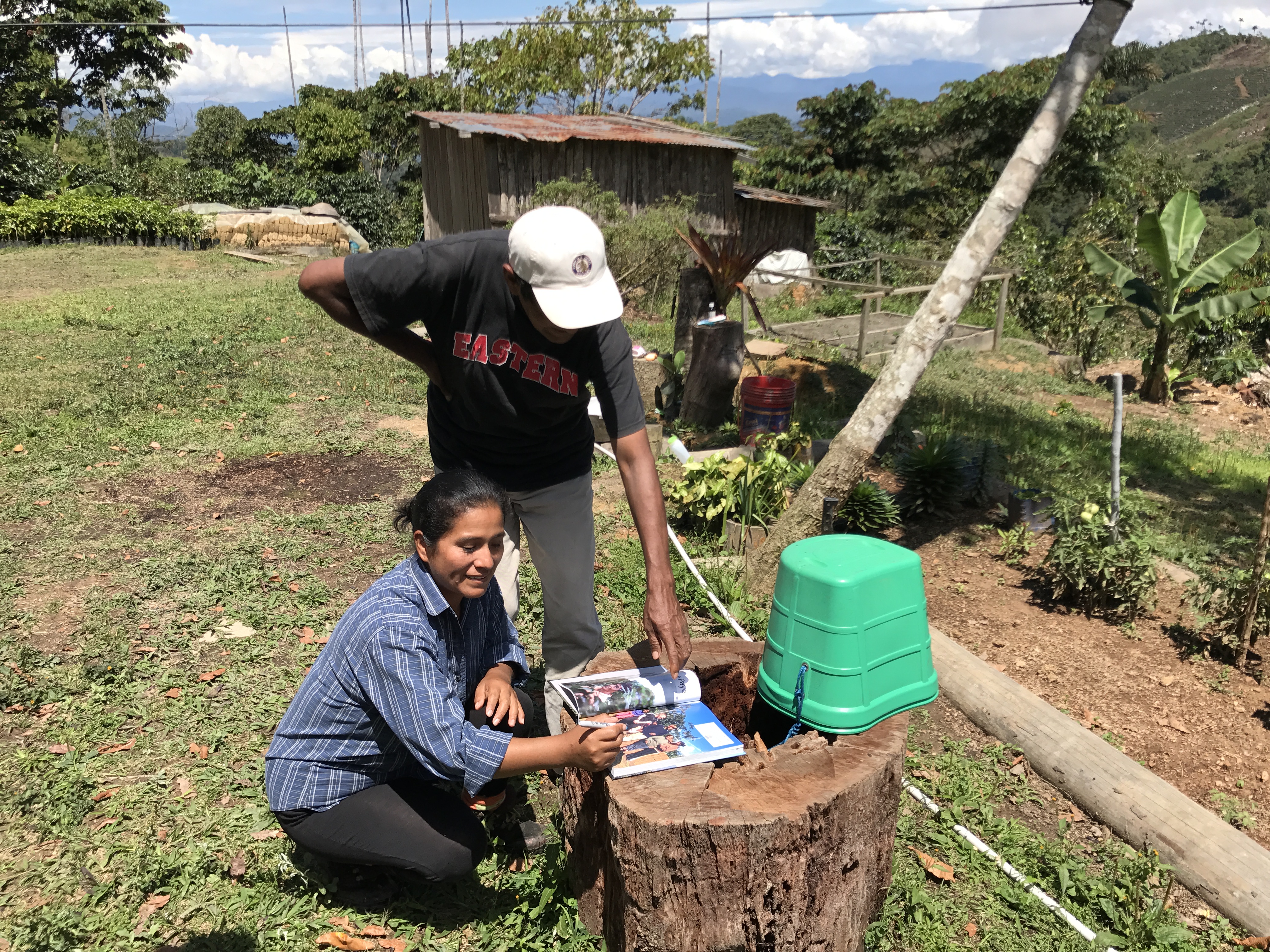
In the past this would have been a cooperative coffee for which we would have only had the cup profile to go on, but with these lots we know who went into making it what it is (and how much of their coffee was added, what its moisture level reading was, what association they belong to). Lots of detail.

The producers behind this are:

Pitalito

Irma Enelia Papamua
Alexander Gomez Trujillo
Mario Trujillo Gaitan
Suiberto Mendoza Hoyos
Aldemar Gomez Cardenas
Pedro Claros Trujillo
Omar Perdomo
Oporapa

Rosa Maria Sterling
Lauriano Chavarro
Nora Rojas Claros
Luz Marina Motta
In the cup expect sweetness by the bucket load: chocolate mixed with walnuts and brown demerara sugar. There is a delicate acidity of peaches, but this is all about sweetness, mouthfeel, and chocolate.

New Coffee:ETHIOPIA KECHO TIRTIRA JIMMA WASHED

".................In the cup the biggest thing about this coffee is its mouthfeel. Thick viscous and gloupy almost chewy. There is an acidity of sweet oranges with a toffee / caramel sweetness that goes on and one..................."

Africa, and in particular Ethiopia is somewhere I vowed to do better this year. Its a tough place to find consistently tasty coffee, and you have to rely on the cupping table solely to find these amazing lots.

That is a lot of work , investment of time and energy to find them only to find next year they are not so good.

This also means reaching out to new importers / exporters all the time, to find tasty and delicious lots.

This is the first Jimma coffee I have stocked in a very long time and this is because its the first one I have tasted and enjoyed. Different to to the other lots as its much more about mouthfeel and sweetness than the normal floral acidity of a washed ethiopian. I hope you enjoy

You can buy it here, or read about it below

Ethiopia is known as the birthplace of coffee. There are more than 1.1 million coffee farmers (smallholders) in Ethiopia, representing 95% of the production. The varieties are referred to collectively as Ethiopian Heirloom, which is a myriad of local native Typica hybrids and new improved varietals based on the old strains. The two main growing areas are in the west and south. Most coffees are organic by default, but they are rarely certified.

Kecho Tirtira is a new cooperative that started to produce coffees in 2011. It’s in a remote area with hardly any access by roads. They strictly adhere to the lot traceability system and maintain very high quality controls through the process. It’s a very well organized cooperative with great location, altitude and future potential is high.

In the cup the biggest thing about this coffee is its mouthfeel. Thick viscous and gloupy almost chewy. There is an acidity of sweet oranges with a toffee / caramel sweetness that goes on and one

Cooperative: Kecho Tirtira
Local municipality: Jimma, Limu – Kossa
Altitude: Located at 1850 – 2050 masl
Producers: About 350 smallholders.
Varietals: Ethiopian Heirloom.
Production: Fully Washed
Soil: Recent volcanic deposits.

New Coffee:COLOMBIA FINCA EL HABANO 386

"............In the cup this, for me, was clean, think water mellon with apricots and transparently bright. A delicious high acidity complex cup................"

This is not Deja Vu, you have seen this coffee be released already this year. What you are seeing is a different days picking.

We cupped this blind back in Colombia and loved both the incarnations. We didn’t sell them together as we didn’t want to create confusion but we did want to offer them so you could enjoy two variations of a farm and process and the dramatic effect that can have on the cup. We do have another like this were holding back and may launch on you later.

You can buy it here of you can read about it below


Jose de Jesus Ramirez has produced coffee for over 10 years from his small farm of around four hectares, which works out at around 8000 coffee trees. For the area, this is one of the bigger farms with the average only being 3 hectares.

In the Central Mountain range of Colombia’s Andes Mountains, sitting beneath the Nevado del Huila within the Tolima province, lies the small town of Gaitania de Planadas. It’s home to 50 coffee growers, with Jose being one of them. Nevado del Huila is an active volcano, with a summit which sits 5,365 meters above sea level.

Due to the volcanic activity of Nevado del Hulia , the area surrounding the Nevado del Huila is among the most fertile in Colombia and provides an excellent micro-climate for growing coffee.

The coffee pickers are paid higher premiums, which ensures only ripe cherries are collected. The producers depulp their coffee in fermentation tanks on the farms,making sure there is no time wasted between picking and processing. The cherries are naturally fermented for 18-20 hours in tanks, washed, and then dried on raised Indian beds.

The area of Gaitania has been an place of great unrest in past years. This is the epicentre of the gorilla fighting and drug wars of previous years, although there have been great improvements in recent years.

In 2009 the coop installed a full cupping lab in Gaitania where each lot of coffee is cupped and analyzed. This provides feedback to producers so they can see how their coffees taste and how they are developing. It also highlights amazing special lots like this one, which may find a special place with a smaller buyer such as ourselves.

So this is the second lot we had from Jose. You may notice the numbers, these signify the different days pickings he produced.

The reason we kept them separated was that they were hugely different. This is the amazing difference picking and processing has on coffee. But we selected it blind as a lot we enjoyed for different reasons so thats why we bought it.

In the cup this, for me, was clean, think water mellon with apricots and transparently bright. A delicious high acidity complex cup.

Coffee:Finca El Habano
Origin:Southern Colombian state of Tolima, small town of Gaitania
Producers Jose de Jesus Ramirez
Altitude:1800 meters
Farm Size: 4 Hectors
Varieties:Caturra, typica and Colombia
Processing Method:Washed
Drying Method:Sun dried on raised indian beds
Harvest:Main: April – June

New Coffee:BRAZIL FAZENDA RODOMUNHO PULPED NATURAL

"............This is a quaffing coffee, one to enjoy any time of day, and not one to think about too much,. its sweet, its balanced its delicious thats it. Its also great value at £4.50..............."

You always know the cold weather and christmas is around the corner when the Brazils start rolling in . We saw the Inglaterra arrive a couple of weeks ago, and this was in the same lot.

The reason its taken a little longer to get on the site, is we wanted to get it right, and I think we now have.

This is a quaffing coffee, one to enjoy any time of day, and not one to think about too much,. its sweet, its balanced its delicious thats it. Its also great value at £4.50.

You can buy it here or read about it below


The Carvalho Dias and Ottoni families have been growing coffee in Brazil since 1890 and are something of an institution in Minas Gerais coffee circles. The fourth generation of Carvalho Dias and Ottoni coffee growers are continuing the family tradition on several farms dotted around the region’s prime coffee growing areas, including Fazenda Rodomunho.

The estate is located in the Alto Paranaíba, the highest part of Minas Gerais’ Cerrado region, at some 900-1,050 metres above sea level. It extends over 450 hectares, of which 316 hectares are planted with some 1.3 million coffee trees of Mundo Novo, Catuaí, Acaiá and Icatú varietals.

This lot was processed using the Brazilian pulped natural method. After being picked, the ripe cherries are pulped on the same day at the farm’s wet mill; the beans are then moved immediately to dry on the farm’s patios without any fermentation or soaking. This means that, unlike a fully washed coffee, the sticky outer mucilage is still attached to the beans during drying, typically producing a fruitier cup.

Good environmental practice is a priority for Rodomunho, and the area under coffee is interspersed with native forest reserves to maintain a good ecological balance and provide habitat for local birds and animals. Solid wastes from processing are recycled as organic fertilizer, while the use of either the natural or pulped natural process keeps water usage to a minimum. What water that is used is recycled and fully treated to avoid polluting local water courses.

The farm also prioritises good conditions for its workforce, offering: fair wages (well above the average for the sector in Brazil); housing with modern services and utilities; a school; a health clinic; and sports facilities. The farm describes itself as a true ‘agrovillage’.

Rodomunho has won several awards and the family’s coffees are regular Cup of Excellence finalists.

In the cup this displays all the things I love about Brazilian pulped naturals. Sweet, milk chocolate, nutty edge with a super big smooth body thats perfectly balanced. Don’t expect any acidity with this one, but do expect a huge smooth rounded mouthfeel

New Coffee:GUATEMALA FINCA PUERTA VERDE ANTIGUA

"....In the cup this is dominated by a lovely grape like acidity, very zingy with a dark chocolate subtle sweetness that makes this not your typical Guatemalan......"

Time for a bunch of new coffees to be released into the wild, this is a first of a few that are coming.

Guatemala is somewhere I’m determined to do better at, and Antigua is somewhere I’ve searched for good coffee from, and had a tough time. Of course this is the fruit of the labour, and one I hope you enjoy

you can buy it here, or take a look below

The Alvarez family has been producing coffee at Finca Puerta Verde since the end of the 19th century. Their 41 hectare farm is located in Ciudad Vieja, Sacatapéquez, in the Panchoy valley. Puerta Verde is now owned and managed by the fourth generation of the family, who are committed to both quality and environmental sustainability.

The farm benefits from a rich volcanic soil and an average altitude of 1,540 metres. The coffee is grown under a protective shade canopy of Gravilea trees, which provide a great habitat for several local bird and insect species.

The cherries are picked by hand, before being pulped and sun dried at a local wet mill. Waste water from the process is recycled to avoid polluting local water courses. The coffee is then rested and milled prior to export.

In the cup this is dominated by a lovely grape like acidity, very zingy with a dark chocolate subtle sweetness that makes this not your typical Guatemalan.

Coffee: Finca Puerta Verde (Antigua)
Farm: Finca Puerta Verde
Varietal(s): Bourbon and Caturra
Processing: Fully washed and sun dried on concrete patios Altitude: 1,540 metres
Owner: Puerta Verde S.A. (Alvarez family)
City: Ciudad Vieja, Sacatepéquez
Region: Antigua Valley
Country: Guatemala

New coffee:BRAZIL INGLATERRA ACAIA NATURAL

"............I am always happy to see our delicious Brazils on their way back............."

Ahhh a chill in the air and Brazils arriving, its a sure sign that winter is well on its way

I’m not so keen on the chill in the air, not one little bit. But I am always happy to see our delicious Brazils on their way back. I can not believe this is the 6th year of stocking this farms coffee, and the 5th of having it all exclusively. To have an entire specialty production from a Brazilian farm is a treat, even more so when its one of your closest friends who owns it.

Super different this year, but you will have to read below why so.

If you want to buy it you can do so here and to find out more look below

A world exclusive, only available as a Has Bean Special. This is a farm we are supporting for the sixth year, and one that I am very proud to be working with and be linked with, as the owner is my very good friend, Stephen Hurst.

I’ll let Stephen Hurst tell you the story of how he came to own ‘Inglaterra’:

“Maybe it had always been an idea in the back of my mind – So a couple of years ago when some friends in Brazil mentioned that a small coffee farm was for sale, I had a look.

The farm (Fazenda Toca Da Onca) means hiding place of a small wildcat. The locals now call the farm ‘Inglaterra’. The previous owners had abandoned Toca Da Onca/Inglaterra; so we had to start again almost from scratch. Some surviving coffee trees were pruned right back and the coffee that you are now drinking is that re-growth from the original old trees. For the coffee people, the varietals are Icatu, Acaia and Catucai. In future I expect coffee cherry varietals to become as well known as wine grape varietals to a much wider audience. The farm is located near the lovely spa town of Pocos De Caldas in the coffee growing heartlands of Brazil’s Minas Gerais state. Elevation 950-1300 meters, rich soil, on the edge of an ancient caldera/ super volcano whose outline can be seen on satellite images. 50% of the farm is Virgin Mata Atlantica Forest and as long as I own it; it will stay that way. I am replanting some areas with the help of my local friends Gabriel and Cristiano, without whose assistance this project would never had started”.

Acaia is a very rare varietal that I didn’t know too much about until we bought it from this farm a few years back now. I had seen it appear occasionally in Brazillian Cup of Excellence lots, but I had never come across it personally until we found this coffee. A hybrid from the Mundo Novo plant, Acaia is mainly found in Brazil and is best grown at altitudes of 800 metres or above. The fruit is large in size and predominately red in colour. In fact, this varietal is rarely encountered outside of Brazil, where it has adapted well to the climate and conditions. There have been varied results when it has been tried elsewhere.

The down-side to this varietal is its susceptibility to coffee plant diseases and pests. Mundo Novo is rare enough and not very prevalent, but Acaia is incredibly rare.

This coffee is so different to the Canario from the same farm, yet at the same time, in some ways, it shares a familiarity. It has the same smoothness and sweetness as Canario. This year we asked Stephen to split the processing of this coffee into Pulped Natural and Natural (this being the Pulped Natural), a more traditional processing method for Minas Gerais area, and a real winner.

This year the nautral is so so delicate. Its the gentleist natural I have tasted in a while which is good if you don’t need those big fruity flavours. but you still get the sweet milky chocolate, it’s just a little more toned and with a touch more apple, plums and a hint of sultanas. Just as with the Pulped Natural, this ends on a cherry like acidity but with more natural flavours on the back end.
In the cup this is so different to what we have seen before from this farm with this process. This year the nautral is so so subtle, its one of the most gentle and delicate examples I have ever seen, which is good if you don’t need like big fruity flavours. What you do get is sweet milky chocolate, it’s just a little more toned a little more cocoa content, with the slightest hint of plums and sultanas giving it natural body without the funk.

Farm: Fazenda Inglaterra
Farmer: Stephen Hurst
City:Poços de Caldas
Region: Minas Gerias
Country: Brazil
Farm Size: 10 Hectares
Coffee growing area: 5 Hectares
Altitude: 1200masl
Varietal: Acaia
Processing System: Natural